
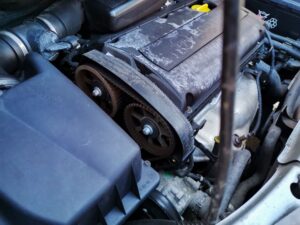
A restricted air intake system often doesn’t show any obvious symptoms all at once. It chips away at throttle response, idle quality, and fuel efficiency in increments small enough for car owners to overlook, until a stubborn cold start finally forces the issue.
At Berryman Products, we’ve developed air intake cleaner solutions for these kinds of under-the-hood problems since 1918. Below, we go over the causes of a congested intake system, symptoms to watch out for, and how to fix it.
How Intake Restrictions Develop
Air travels through a complex path to reach your engine, starting at the filter housing, passing the mass airflow (MAF) sensor, moving via the throttle body, and into the intake manifold.
To ensure all components work properly, this path must remain unobstructed. However, over time, oil mist from the PCV system, combustion blow-by, and carbon deposits from thousands of heat cycles coat the walls of these passages. By the time symptoms become noticeable, the buildup has already been costing you performance for miles.
Signs Your Intake System Is Restricting Performance
While many engine issues share similar symptoms, a restricted air intake has a few distinct signs:
- Sluggish Acceleration: When your intake is restricted, your engine is starved of the air charge it needs under hard throttle. A clogged air filter can add more than 1.6 seconds to a standard vehicle’s 20-to-80 mph acceleration run, an 11% performance loss on a routine highway merge.
- Rough or Unstable Idle: To maintain a smooth idle, your throttle plate needs a clean bore to manage low-RPM airflow. Once carbon and varnish deposits build up in this area, the engine loses precision, resulting in a frustrating, unpredictable RPM surge.
- Hesitation Under Load: When a MAF sensor is congested, it reads airflow as lower than it actually is. Because of this, the ECU fails to match fuel delivery to your immediate throttle demand, resulting in a noticeable bog, flat spot, or stumble when passing or accelerating from a dead stop.
- Hard, Cold Starts: Cold starts depend on an accurate air-fuel ratio from the first crank. A coated MAF sensor or dirty throttle body disrupts that initial calibration before the engine even has a chance to warm up.
- Rising Fuel Consumption: When intake restriction limits airflow, your engine has to work significantly harder to draw in air. This means your engine will burn more fuel to produce the same amount of power. Over a few weeks of driving, this extra throttle input will be reflected in higher pump prices.
- Check Engine Codes: Lean fuel trim codes, out-of-range MAF readings, and throttle position faults can all trace back to intake contamination. Before replacing sensors, clean the intake system first.
What To Check Before Purchasing Products
A few quick inspections help confirm whether the intake system is your actual problem.
- Inspect the Air Filter: Hold it up to light. If you can’t see light passing through the filter media cleanly, it may need cleaning or replacement.
- Examine the Throttle Bore: With the intake tube removed, shine a flashlight at the throttle plate. A dark, gummy coating on the bore or the throttle plate itself indicates the system needs more than an air filter swap.
- Look at Your Driving Pattern: Short trips, typically under 15 minutes, prevent the engine from reaching a stable operating temperature consistently. Oil vapors and moisture accumulate in the intake instead of burning off. A longer highway run every few weeks gives the system a chance to clear out.
Restore Clean Airflow With Berryman® Air-Intake & Throttle Body Cleaner
There are solutions you can use when you find deposits during inspection. Berryman® Air-Intake & Throttle Body Cleaner (#2209) quickly dissolves carbon, varnish, and gum deposits from fuel-injection air-intake components. It’s safe for catalytic converters and oxygen sensors, and the included extension tube lets you apply it directly to the throttle bore without disassembling the intake.
If your check engine light points to fuel trim or air metering issues, Berryman® Mass Air Flow Sensor Cleaner (#2211) removes contamination from the sensing element, restoring accurate airflow readings. Using both of these air intake cleaners cover most of the common causes of intake performance.
For a full-system service, the Berryman® 4-Step Professional Air-Fuel System Maintenance Kit addresses the intake, injectors, combustion chamber, and fuel system in a single pass.
Don’t Skip the Drive Belt
While you’re under the hood, take a few minutes to check the accessory drive belt for any issues. A slipping or squealing belt reduces efficiency across the alternator, power steering pump, and other components, including the air intake system.
Berryman® Tite-Grip® Belt Dressing (#0807) stops belt squeal and slippage while conditioning the rubber for longer service life. For the pulleys, brackets, and rubber components surrounding the belt system, Berryman® Professional Silicone Spray (#1716) provides clean, long-lasting protection from -50°F to 500°F without leaving residue that attracts grime.
Find Berryman Products at a Retailer Near You
Our air intake cleaner and other products are available at retailers across the United States, including O’Reilly Auto Parts, Amazon, Home Depot, and Ace Hardware. Use the Where to Buy locator to find a store near you, or contact our team about distributor options for shop and fleet purchasing.